

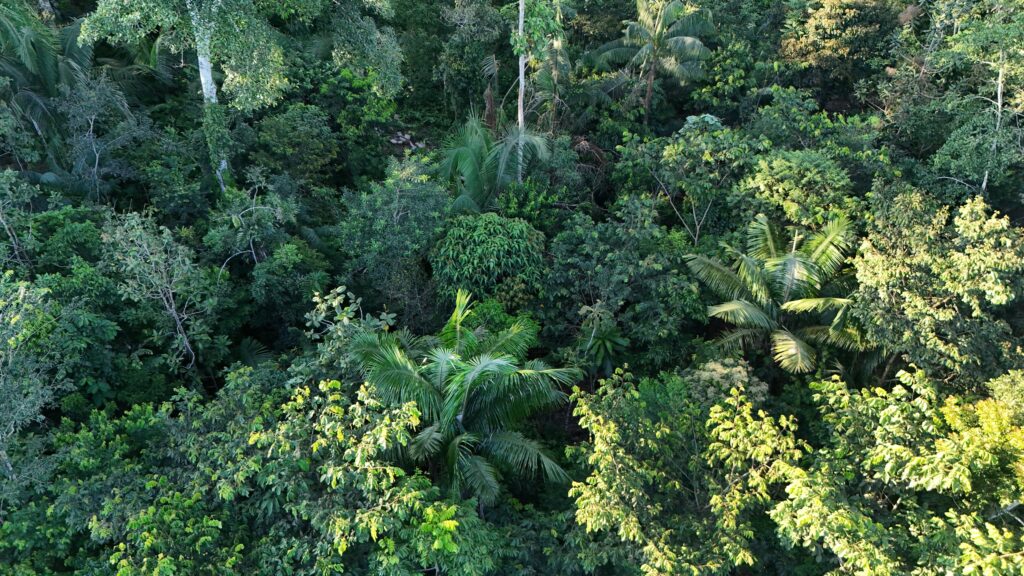
Je mehr Macht der Mensch über ökologische Prozesse gewinnt, desto mehr wird Systembewusstsein zur kulturellen Reife. Vielleicht ist das nicht nur eine Notwendigkeit und die Gestaltung lebensfördernder Bedingungen wird zur Aufgabe. Durch die aktive Kooperation mit der lebendigen Intelligenz der Natur wird der Mensch zum „Hüter“ des Landes – für eine nachhaltige Entwicklung und eine Zukunft, in der Mensch und Natur sich gemeinsam entfalten.
The Philosophy behind the Name
Mother Nature – The self-regulating System
Gaia is an ancient name for Mother Earth or Mother Nature. In Greek mythology, it refers to a goddess who is also known as the giver of life, nurturer, and sustainer. She is the spirit of the earth, plants, rocks, and water. Like the people of earlier cultures, spiritual movements such as Zoroastrianism, Shintoism, and indigenous people continue to attribute certain entities or archetypes to animate and inanimate objects in the world. As in many religions, the resulting explanation and division of the world may have helped people in the past to make the complexity of the world more tangible and easier to understand.
While the image of Gaia as a goddess still retains a degree of wholeness, the approach of breaking the world down into its individual parts for a better understanding has reached extreme proportions in modern science. A counter-concept can be seen in the work of scientists James Lovelock and Lynn Margulis, who have revived the name for their Gaia hypothesis. This describes the Earth as a living, self-regulating system in which biological and geophysical processes are interwoven. According to this understanding, the Earth is not merely a place of life, but itself a living organism that is constantly striving for balance, life promotion, and self-healing.
Gaia Guidance adopts the name Gaia in resonance with both approaches. In the practice of assigning a personality to objects in the world, Gaia Guidance sees the effect of creating connection and thus promoting understanding, humility, and respect for the surrounding world. The concept of a person or entity also implies the existence of its own consciousness, its own will, or an inherent intelligence. These can ultimately be recognized in the diverse, real, and observable mechanisms, relationships, and patterns of Mother Nature. Similar to a brain, nature is composed of a multitude of elements (nerve cells) that are interconnected (synapses) and influence each other (impulses), creating a self-regulating, independent, and, above all, functional system. Against this backdrop, Gaia Guidance invites people to view nature not merely as a collection of separate parts, but as a dynamic whole with inherent intelligence or even wisdom — a web of life whose integrity also directly affects human well-being.
Nature as a Guide
For Gaia Guidance, humans are one of many elements in the system of ‘nature’, which plays a role that encompasses and transcends humans. Nature is not only an object, but also the stage for human action, and it determines the framework conditions for human existence. Being part of nature ultimately requires acting in accordance with the principles underlying the system for one's own well-being. Instead of perceiving this perspective as a restriction, Guidance stands for the idea of allowing oneself to be guided and inspired by the wisdom of Mother Nature, like a child, in order to grow and develop. Being embedded in the greater whole enables us to reconnect with our own nature and not only increase the quality of our actions in the world, but also give them real sustainability and meaning. The “golden ratio” is an example of the influence nature can have on the human perception of quality and how deeply rooted the principles of order are in human beings. The golden ratio is a specific proportion that manifests itself in nature wherever stability, efficiency, and balance come together in perfect harmony — from the structure of a sunflower to the structure of galaxies. For humans, this proportion is the embodiment of aesthetics and beauty. When people design and act according to principles like these, they can create things that not only function superficially, but also radiate a deeply felt coherence and timeless quality.
The perspective of nature as a teacher and compass is therefore central to the work of Gaia Guidance in developing sustainable and holistic solutions, as well as designing efficient and resilient systems. Despite scientific progress, humans are still far from fully understanding nature. Gaia Guidance does not presume to have all the answers. However, based on the conviction that the structure of the whole is reflected in its smallest parts, Gaia Guidance believes that humans are fully equipped to find the answers to their questions. The role of Gaia Guidance is merely to accompany and facilitate this process with knowledge, food for thought, or guidelines. Its work is based on holistic approaches such as Permaculture and a systemic view of the respective challenges, taking the context into account. Through observation and methods based on natural processes, the goal is to achieve the highest possible degree of harmony with natural systems.
Humans as Guardians of the Land
Gaia Guidance is convinced that humans can exert just as positive an influence on the world as it currently appears to be negative. Their destiny lies not in technologically driven separation from nature, but in active cooperation with its living intelligence. Humans are not only part of nature; they play a special role within the living organism of Earth. While the fundamental orientation of life — in the sense of the Gaia hypothesis—may be predetermined, humans have the unique ability to consciously shape this system through their intellect.
In this respect, there is a strong resonance with the self-image of indigenous cultures, which see themselves as “guardians” or “keepers” of the land. Such a self-image implies always combining the fulfillment of one's own needs with mindfulness and awareness of the greater whole. Gaia Guidance sees this as the true purpose of human beings. Understanding and new perspectives are the key to living (once again) in harmony with nature — for sustainable development and a future in which humans and nature can flourish together.
From Theory to Practice
Climate Change as an Opportunity
Today, the debate on climate change often focuses on humans as a disruptive factor and symbolizes the supposedly negative influence of humans on their environment. While the discussion about responsibility and the conservation of fossil fuels is justified, it often remains insufficient as the sole solution and sometimes seems counterproductive. For Gaia Guidance, the question of “Who or what is to blame?” is therefore less relevant than the question: “How can we deal with the situation and create a future worth living?” This solution-oriented approach offers the opportunity to pursue regenerative solutions with a positive impact on the environment that can reverse the negative perception of humans. Instead of focusing on sacrifice and damage control, Gaia Guidance concentrates on the opportunity to exert a measurable positive influence on the environment that goes far beyond mere avoidance of CO₂ emissions.
Vegetation and Water Retention as a Holistic Solution
The design approach of Permaculture is based on the guiding principle “The Problem is the Solution." This statement emphasizes that a potential or an opportunity is often hidden behind a supposed problem. Therefore, if the problem in the context of climate change is the excessive release of carbon, then the solution lies in effectively utilizing the surplus carbon.
Conveniently, carbon compounds are one of the basic building blocks of life on Earth. Instead of risky or energy-intensive technological processes, the natural carbon cycle therefore offers an effective method and opportunity to regulate the atmosphere and regenerate life on Earth at the same time. Gaia Guidance therefore sees the promotion of vegetation as an efficient, decentralized, and multifunctional tool for holistically addressing many additional challenges of our time. Vegetation is much more than a passive carbon sink — it is an active regulator of vital cycles. As part of the highly complex system that is ‘Earth’, it transforms carbon into living biomass and fertile soil and buffers the effects of extreme weather events. It produces food, cools the microclimate through evaporation, and provides habitat for countless organisms that play their own crucial role in the web of life. Finally, vegetation is the engine of the global water cycle: it plays a key role in the formation of rain and transports moisture far inland.
Since plants are inextricably linked to the water cycle, Gaia Guidance specializes in active water retention in the landscape, in addition to agroforestry systems. Water is understood as the basis of all life and thus as one of the most valuable assets of an area. Targeted measures slow down runoff and promote infiltration. This increases groundwater recharge and creates the conditions under which vegetation can thrive permanently and natural cycles can regenerate. The result is systems that not only survive but generate real growth.
Passion and Expertise for Permaculture
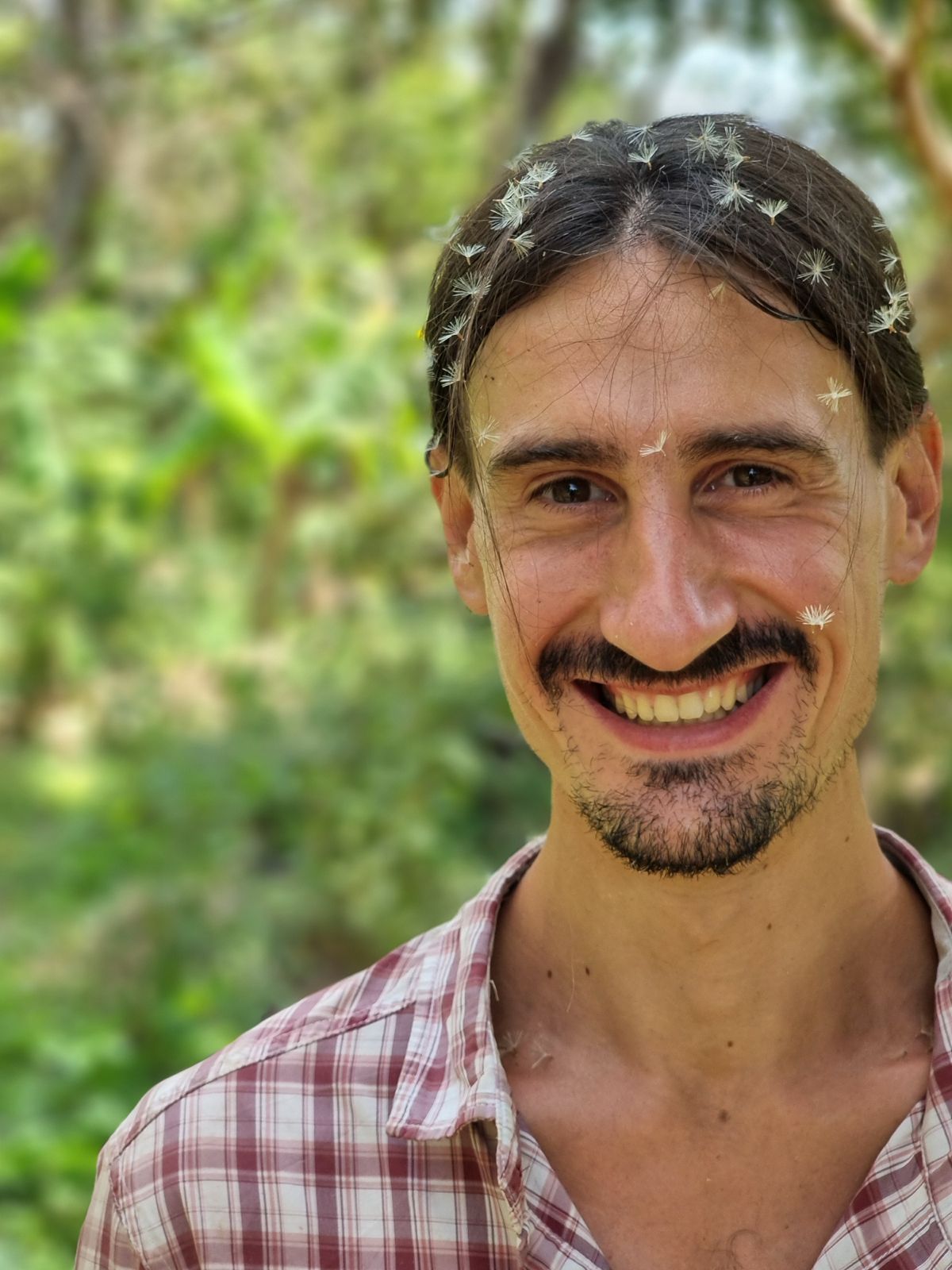
Bernhard Wenzel – The Face of Gaia Guidance
Seit meiner Kindheit besitze ich eine Leidenschaft und Faszination für die Erde. „Die Natur zu schützen und helfen, sie zu erhalten“ Since childhood, I've been passionate about and fascinated by the Earth. “Protecting nature and helping to preserve it” is one of the pledges I made as a young scout. This pledge has accompanied and shaped me ever since. During my education, I studied earth and environmental sciences with a focus on geology, hydrogeology, environmental chemistry and ecotoxicology, as well as applied hydrology and water management. In doing so, I developed a growing awareness of the challenges society faces in relation to our environment. In the principles of Permaculture, I finally found for myself the answers to those challenges and the necessary tools to actively contribute to change. In the context of Permaculture, I also developed a growing enthusiasm for regenerative agriculture, water retention, and syntropic agroforestry.
After graduating, I was able to gain a lot of practical experience and deepen my knowledge by volunteering on various farms in Germany, Australia, Spain, Senegal, and Colombia over the past few years. During advanced training at the Permaculture Academy from 2020 to 2021, I lived and worked at the Demeter farm and Permaculture learning center Hof Luna in Everode, as well as at the Weidenhof Center for Consciousness and Mindfulness near Gernsbach, where I carried out my first Permaculture project on the utilization of organic waste. During this time, I also started Geoff Lawton's online Permaculture course and attended Oliver Fretzer's Permaculture design training.
From 2022, I lived for about a year and a half in the Maitreya Healing Biotope near Murcia, in southern Spain. There, I worked as a gardener, landscaper and permaculture consultant – and was also part of the core team for some time. I established a vegetable garden for self-sufficiency and a tree nursery, and managed the transformation of around 20 hectares of land that I had designed. I also held courses on Permaculture and related topics. In November 2022, during a visit to Germany, I took my first course in “Syntropic Agroforestry” with Felipe Amato at Hof vErde near Erlangen.
After my time at the Maitreya Healing Biotope, I founded Gaia Guidance and took on a freelance position with the Archdiocese of Rottenburg-Stuttgart Volunteer Services, conducting educational seminars for participants doing a federal volunteer service. During this time, I was able to expand my skills in planning, organizing, and conducting educational events.
An educational journey eventually took me to Senegal and Colombia in 2025. In Senegal, I supported the FoodForestNetwork in conducting two workshops on permaculture, syntropic agroforestry systems, and water retention, and helped with the management of existing agroforestry systems. In Colombia, I had the opportunity to visit the Viracocha Center for Permaculture and Agroecology (CEPA) in San Agustin and gain insight into farming methods in tropical South America.
Meine Kompetenzen
Throughout my career, I have acquired skills and knowledge that I consider particularly valuable for my work:

Scientific education (specialized knowledge, awareness of ecological cycles, and long-term systemic thinking)
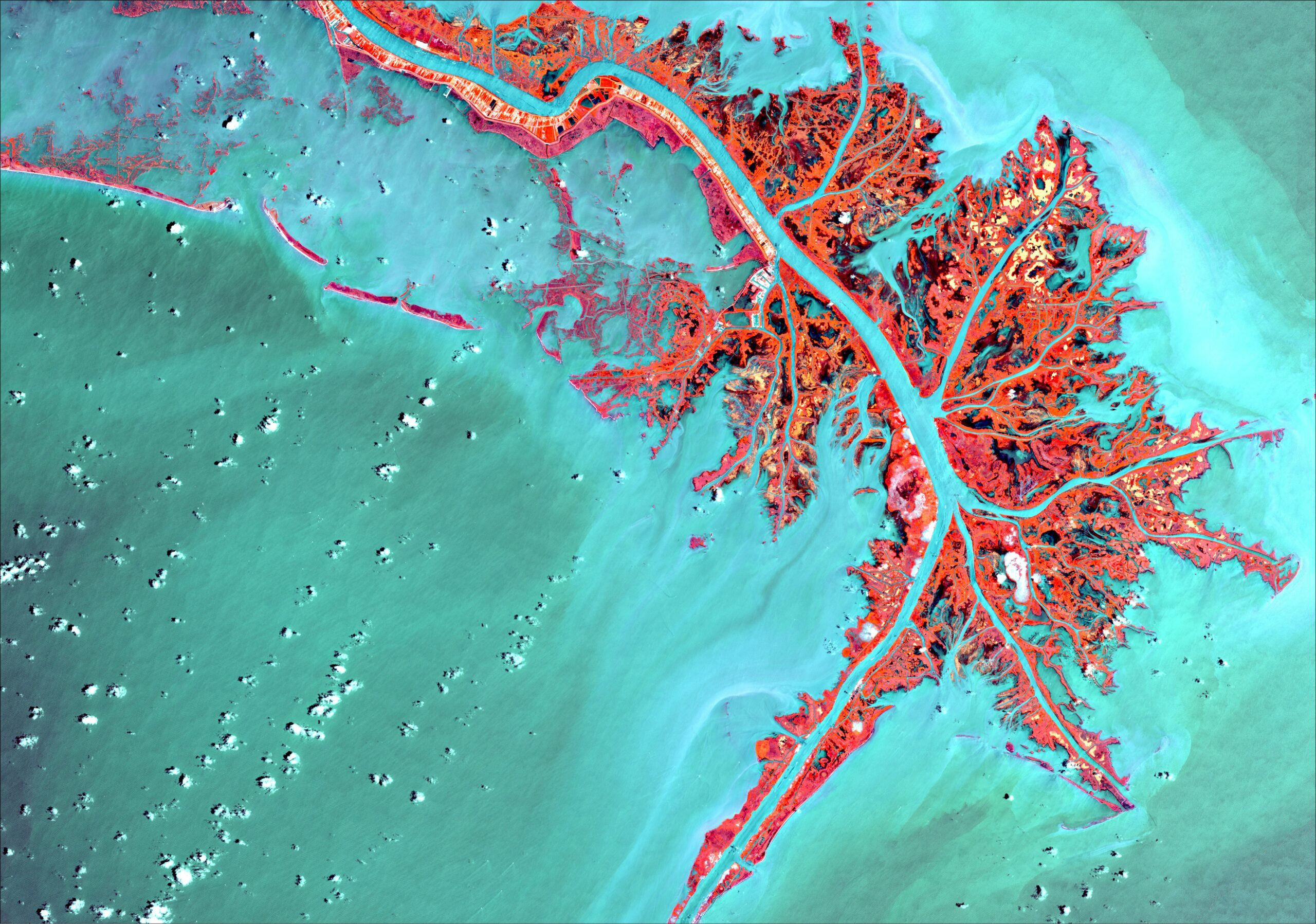
GIS-Application
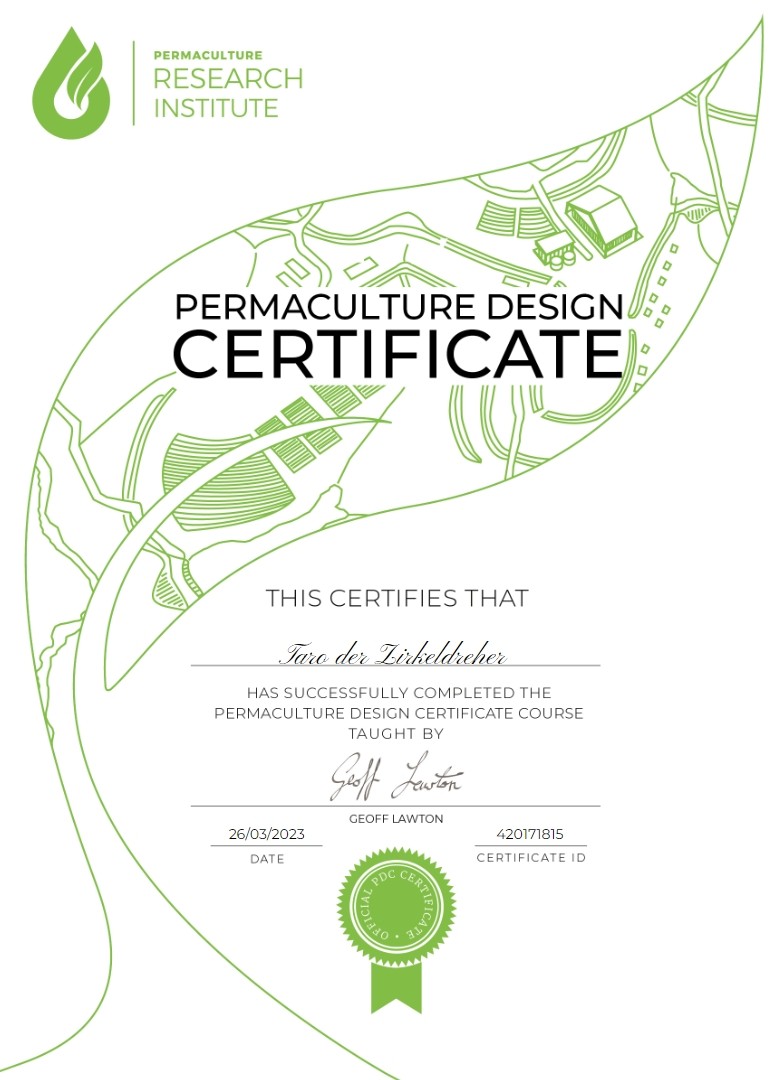
Permaculture design (certificat)
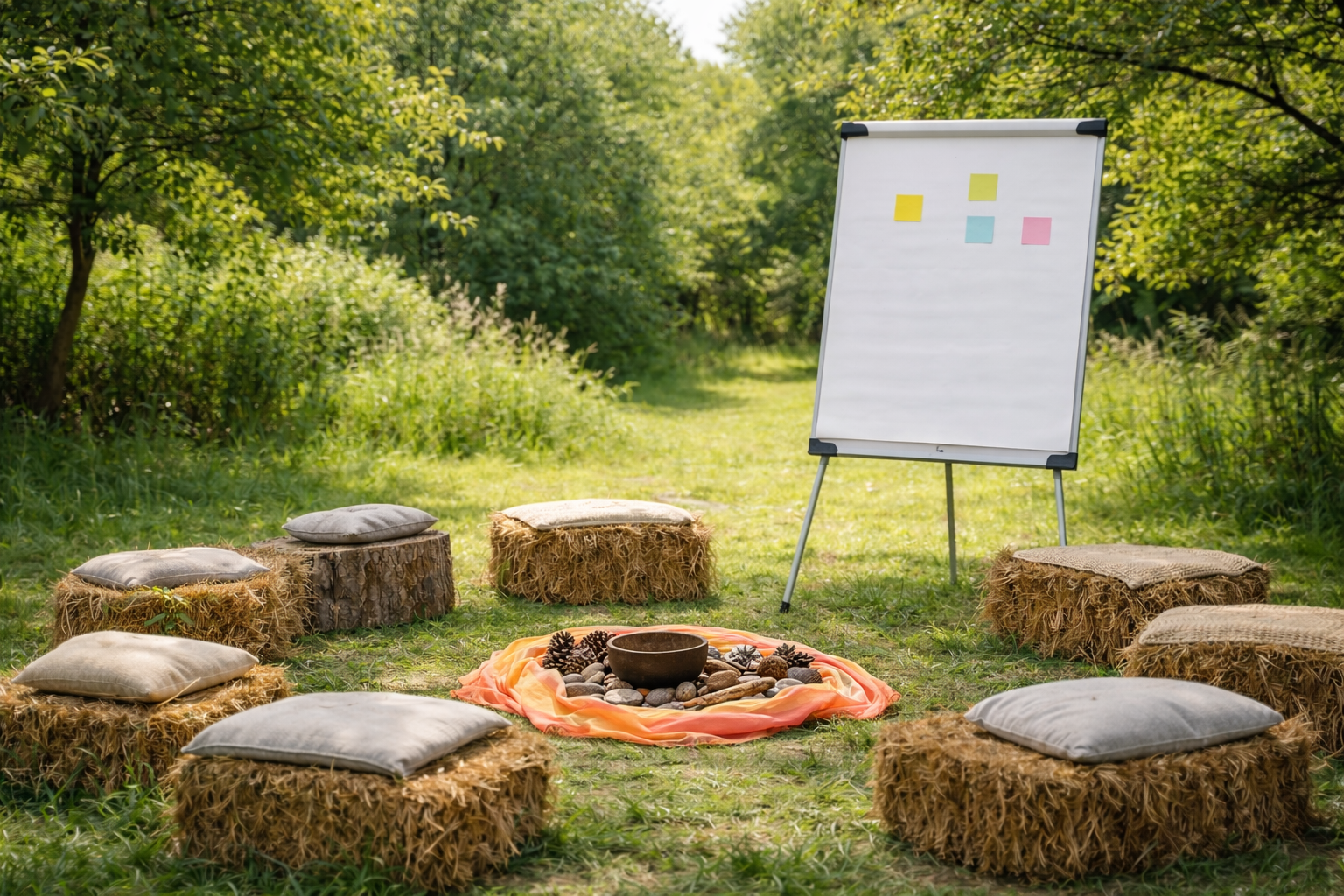
Planning, organization, and conduct of educational programs (day events to week-long seminars and courses)
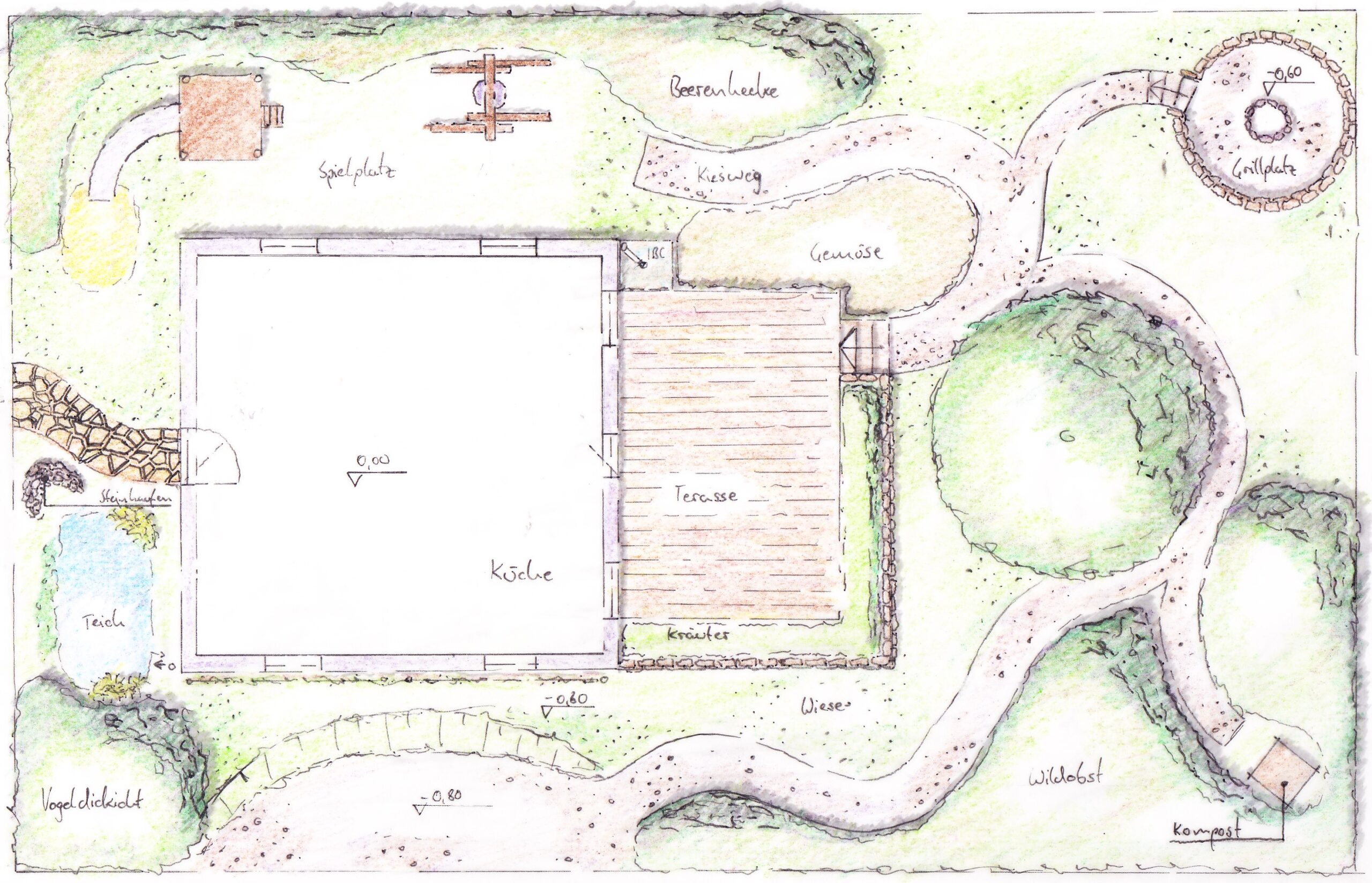
Planning, organization, realization, and management of:
- Horticulture
- Syntropic agroforestry systems
- Water Retention & Erosion Control
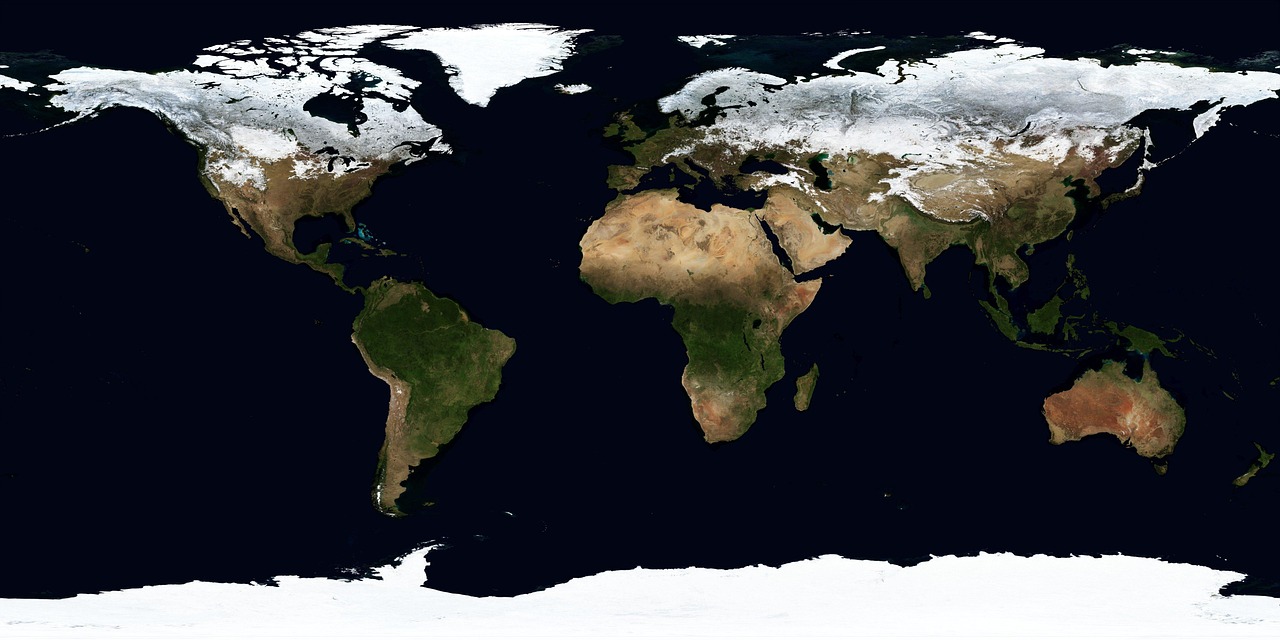
Experience with various climate zones
Definition of Terms
Permaculture
Most people first encounter Permaculture in the context of gardening or agriculture. Its popularity in these areas can probably be traced back to the origins of Permaculture and its original objective of developing “permanent agriculture” that is more closely aligned with the model and functioning of nature. At its core, however, Permaculture is about a holistic and interdisciplinary design approach and a multidisciplinary toolkit. This ultimately allows Permaculture to be applied universally. Therefore, with a view to the future and coming generations, the essence of Permaculture is today often associated with the establishment of a “permanent culture”.
This culture is characterized by personal and collective responsibility and autarky, and is committed to reducing or positively reversing the negative ecological impacts of human activity. The tools for this are a solution-oriented attitude and the intelligent design of self-organizing, regenerative, resilient, multifunctional, and thus lasting systems. In analogy to natural ecosystems, Permaculture therefore welcomes diversity and complexity in its efforts to create cooperation and partnerships with mutual benefits.
Against this backdrop, permaculture is based on ethics (Earth Care, People Care, Fair Share) and principles that have emerged from observing nature and various (indigenous) peoples who live(d) in harmony with their environment. The philosophy behind these ethics emphasizes the inherent value of everything and is committed to promoting harmonious coexistence in order to meet the needs of all participants in a system. This attitude is at the heart of every permaculture design.
Senescence
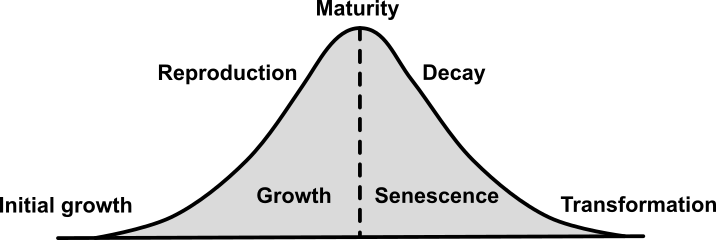
Every organism goes through different phases in its life cycle. Put simply, the beginning is usually characterized by increasing growth. Eventually, the reproductive phase begins, during which the organism's reproduction takes center stage. At its zenith is the stage of maturity. Here, growth ends and tends to transition into a phase of decay. The subsequent degenerative process, which accompanies natural aging, is described by the term senescence.
Strata
The plants in a forest occupy a specific space in the vertical dimension. Based on the expected maximum height of a plant species and its light requirements, the plants are categorized and assigned to a simplified vertical zoning:
| High light demand / Tall growth height | Emergent | Emergent layer |
| High | Canopy layer | |
| Medium | Understory layer | |
| Low light demand / Low growth height | Low | Shrub, herb & floor layer |
Succession
The term describes the development process of a given system, usually towards a specific end state. In this process, an existing element is gradually replaced by another until it may disappear from the system.
The evolution of an ecosystem is referred to as natural succession. Each stage is characterized by a specific species composition and characteristics.
| Microorganisms | Bacteria | Fungi | ||||
| Plants | Rock | Mosses/Lychens | Pioneer plants | Perennial plants & grasses | Young forest | Old forest |
| pH | Alkaline | Acidic |
Syntropy
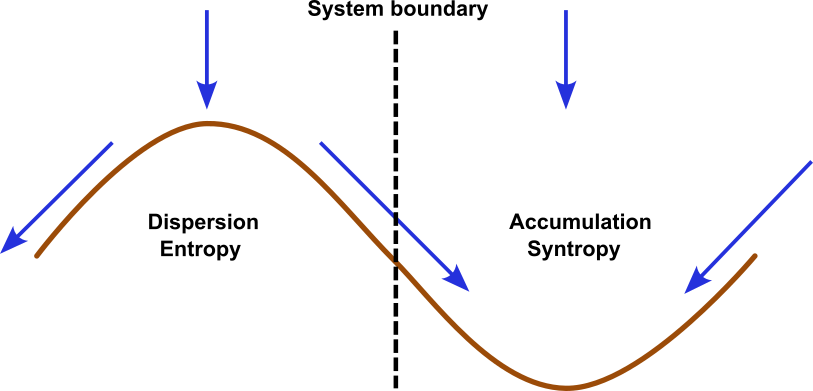
As a counterpoint to the concept of entropy, syntropy stands for the increase in complexity and stored energy in a given system. A syntropic system is therefore characterized by a high degree of complexity, for example in the form of high biodiversity and complex food webs, and is designed to retain energy within the system. The elements of the system are in cooperative relationships with each other, which reinforce each other.
Water Retention
Water retention involves managing surface water for the purpose of slowing it down before it leaves an area. Surface runoff is slowed down by using retention elements such as lakes, ponds, terraces, tanks, or ditches. It can be distributed and stored for later use or infiltrated into the ground, where it is available to a wide range of users.
One of the main objectives of water retention is groundwater recharge. The infiltrated or otherwise stored water is then not only available to plants, but also serves as a source of drinking and utility water. The resulting water bodies provide habitat and microclimate, as well as reserves for mitigating extreme weather events and their consequences, in particular floods and droughts, erosion, and forest fires.