

Two weeks, two countries, two projects — a journey to southern Europe driven by the question of how water can be retained in the landscape for as long as possible and used efficiently.
Back at the Maitreya Healing Biotope: Renovation of a Plant-Based Wastewater Treatment System
My journey begins with a visit to the Maitreya Healing Biotope near Lorca in southeastern Spain. This was my first visit to the project in about two years, for which I had developed a regenerative design and transition concept about five years ago. I spent a week there to maintain relationships, provide consultation, and renovate a plant-based wastewater treatment system that I had installed during my earlier stay.
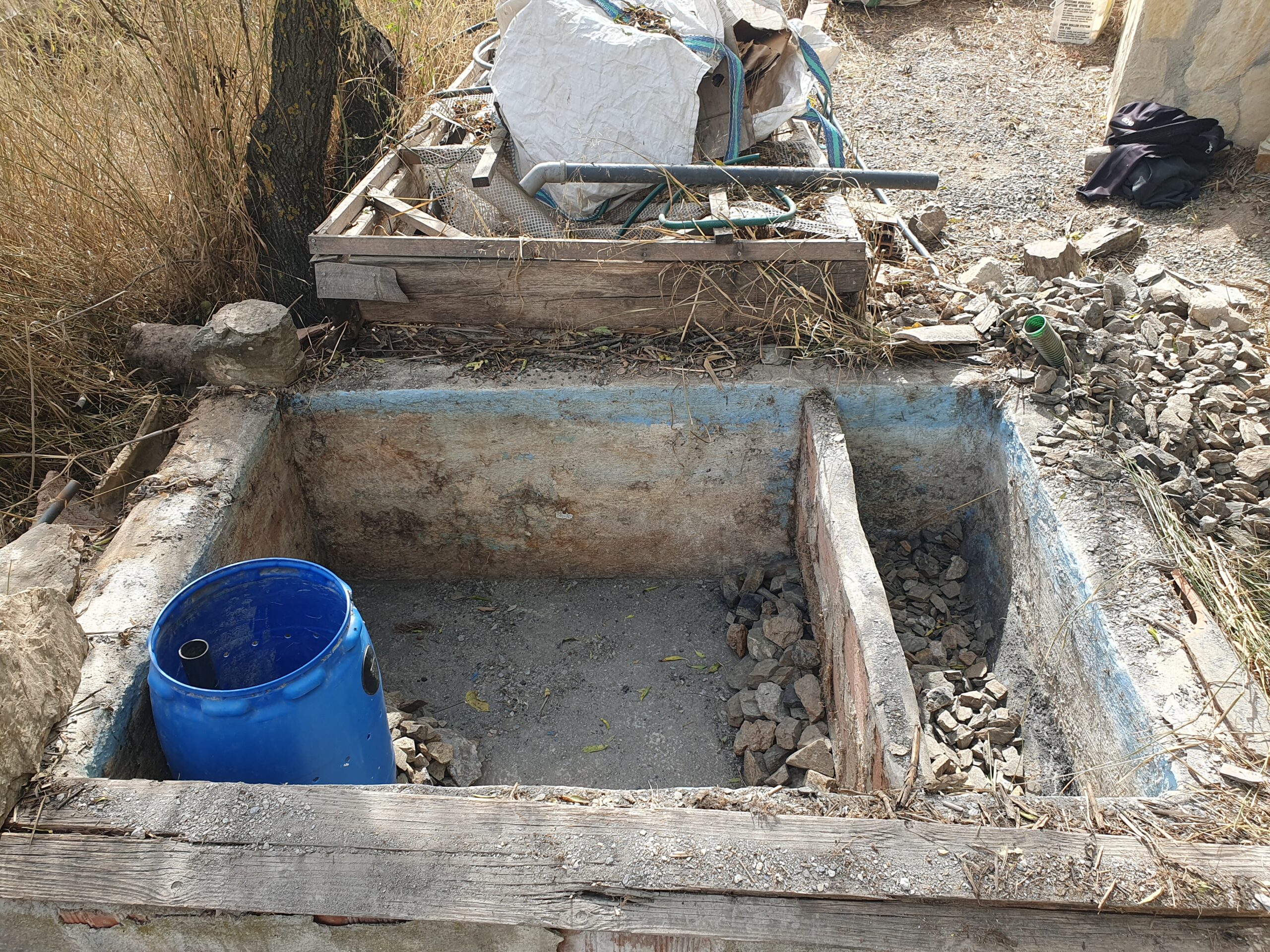
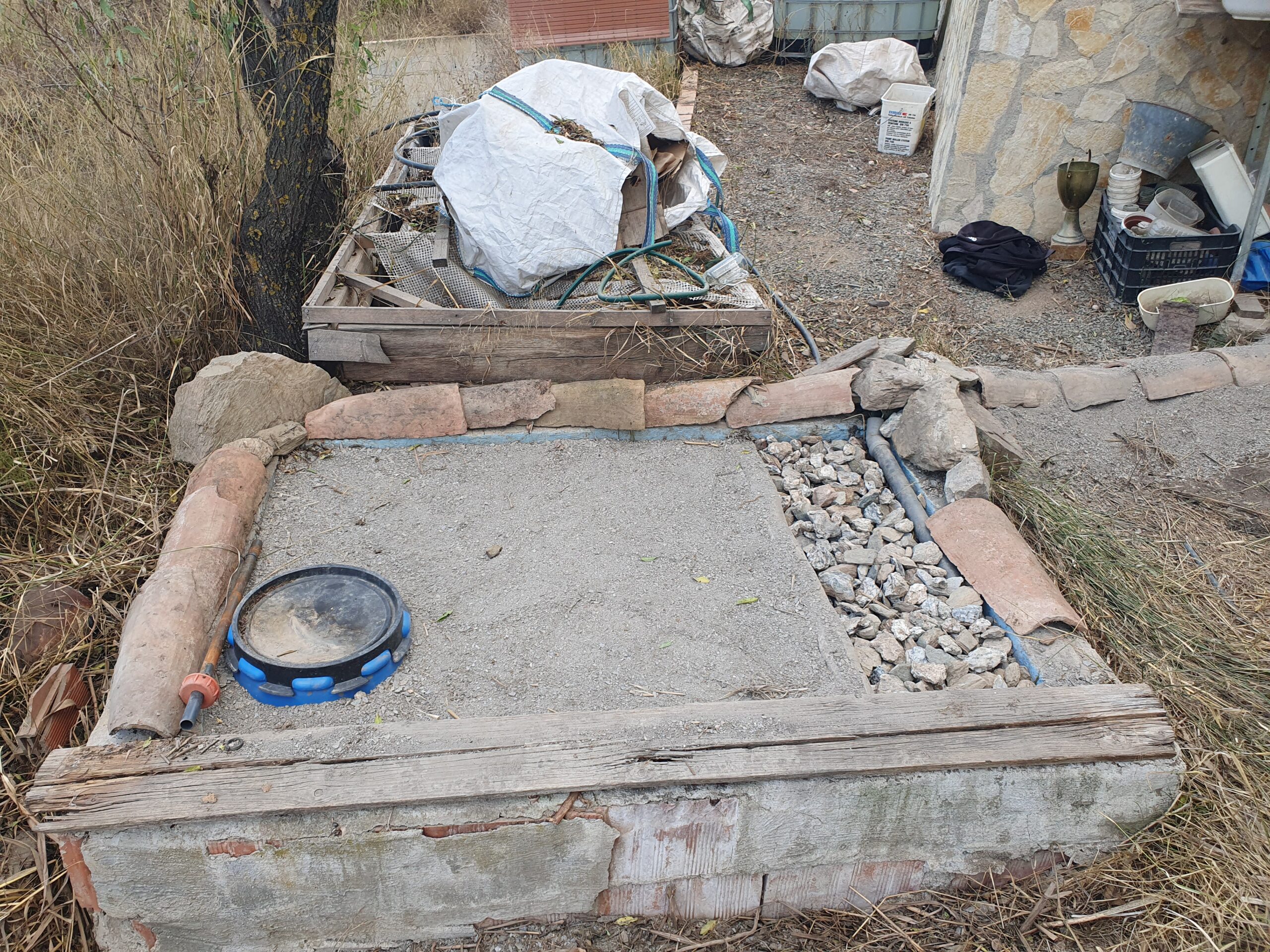
The system is intended to filter the water from the shower and washing machine before it is reused to water the trees in the adjacent garden. It’s a simple yet effective way to significantly reduce the community’s water consumption, since fresh water is no longer needed for irrigation. An existing, unused basin was repurposed for the system at the time. The renovation aimed to replace the old filter media and redesign the drainage system to extend the system’s service life in the future.
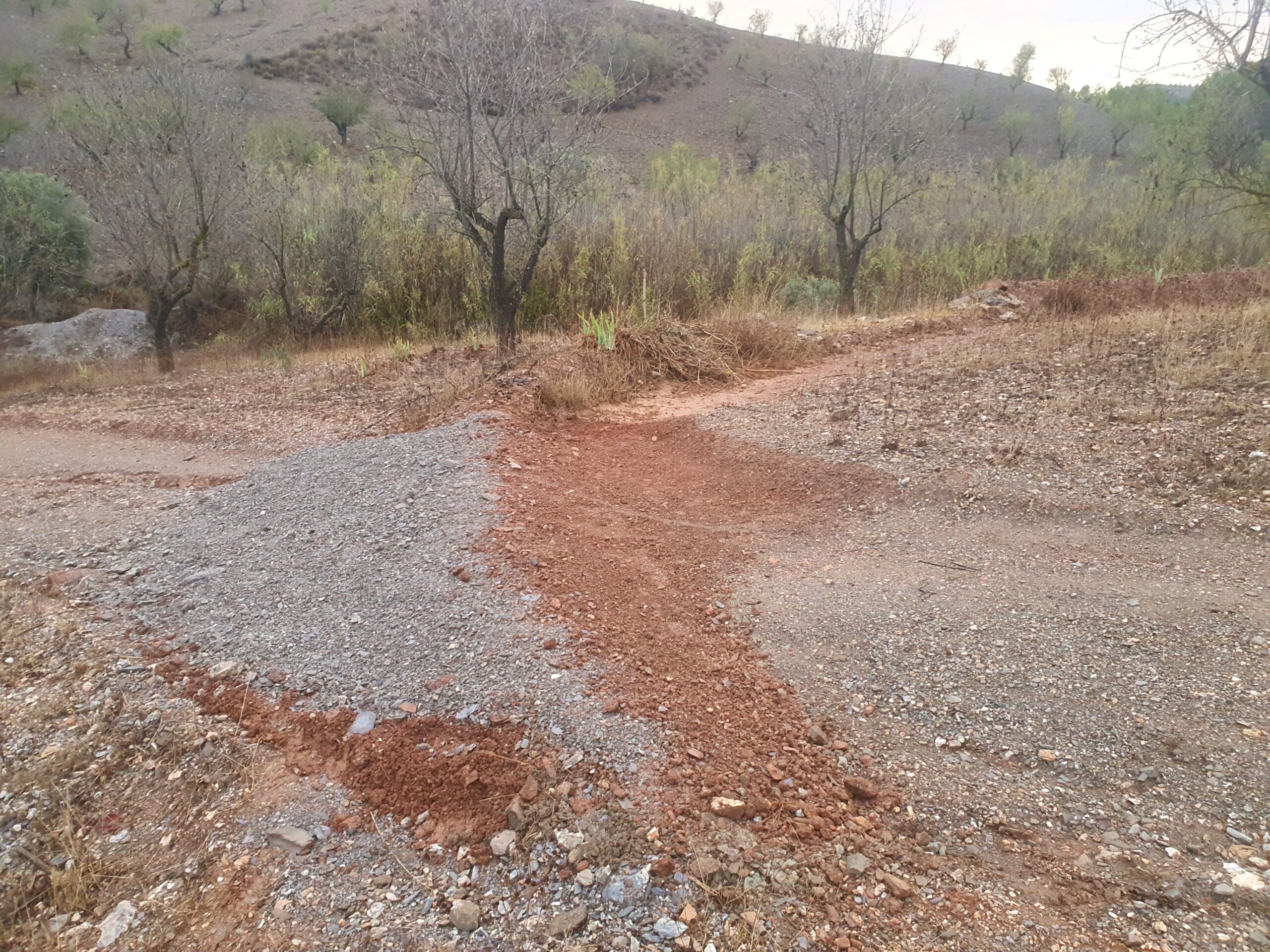
To accomplish this, the old material was removed and partially sifted so that the nutrient-rich fine material could be reused specifically as a planting amendment. The coarser residue was used to build paths in the garden. After about three days of work, the system was operational again. Now it just needs to be replanted so that the biological purification process can get back on track.
When It Rains in the Desert: Storm “Adam” as a Real-World Test
During my stay in Maitreya, it became clear why water retention is so important in times of climate change and increasing environmental degradation. Storm “Adam” brought heavy rainfall to a region that otherwise goes months without precipitation. The lack of vegetation and surface water bodies disrupts the water cycle, contributing to extreme fluctuations in precipitation levels. As a result, prolonged periods of drought are interrupted by torrential rains and flooding because the soil can barely absorb or release the water. This is exactly where regenerative water retention comes into play.
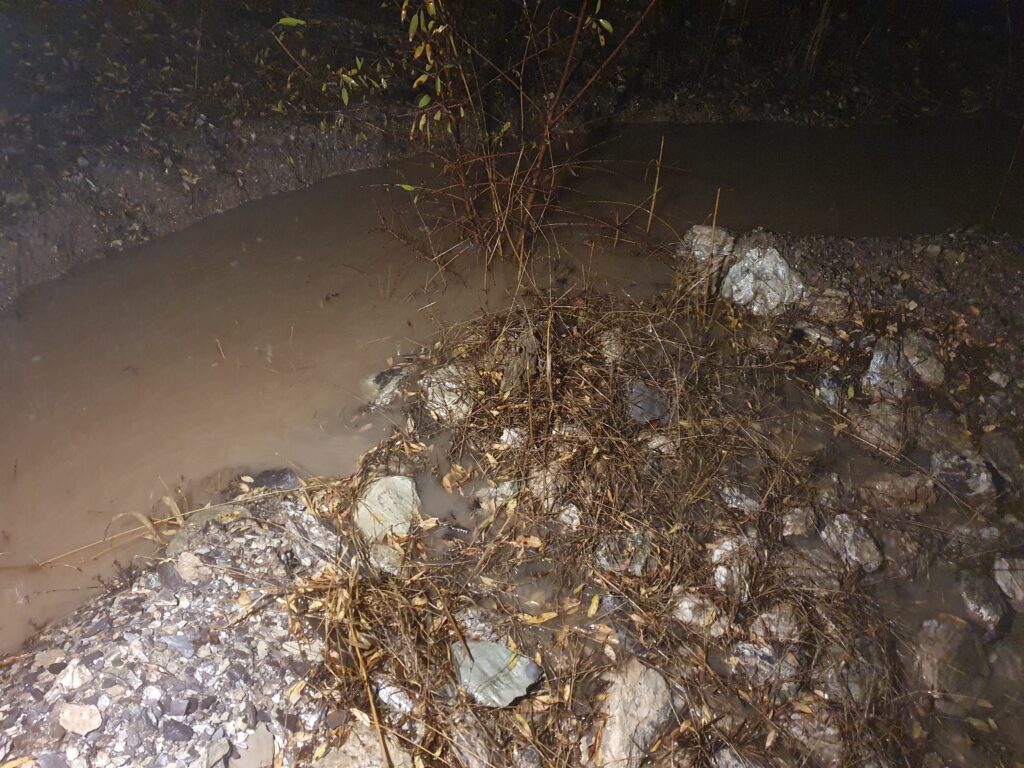
To counteract this downward spiral, I had constructed several water retention features during my year-and-a-half stay in Maitreya — basins, ditches, and other small retention structures designed to hold back the water and direct it into the ground. A real downpour is the best test one could hope for, which is why I took the opportunity late in the evening to observe how the structures I had created performed.
Overall, things looked good. While only the top 3 cm of soil in the open landscape was saturated after hours of rain, the retention elements slowed down and collected the surface runoff. This allowed the water to truly penetrate the soil. Excess water could be diverted in a controlled manner. I identified a few weak spots, which I corrected the next day. A field test could hardly have gone better.
While the situation in Maitreya was under control and the collected rainfall helped replenish the local groundwater reservoir, nearby Alicante experienced flooding that resulted in property damage and loss of life. If more water were retained within the watershed, such events would be mitigated because the rain would infiltrate the ground where it falls. In addition, the water would also be available to people, plants, and animals during the summer dry season.
Portugal: Water Retention on Burned Land
After my stay at the Maitreya Healing Biotope, my journey continued to Portugal. There, I planned to meet up with a fellow student from the Watercycle Restoration course offered by Water Stories, which I had participated in this year. I was invited to assist him with a project for a client near Fundão.
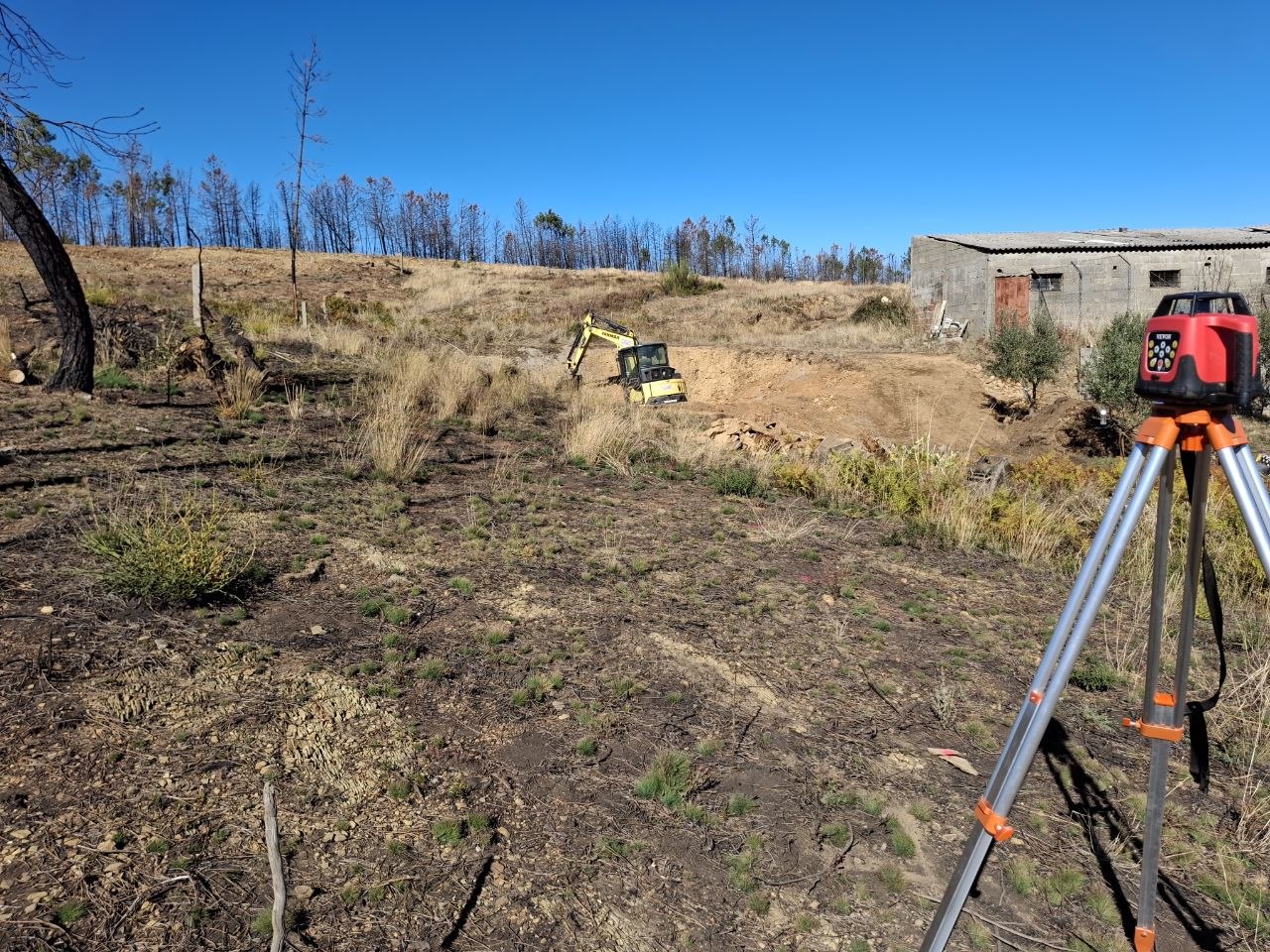
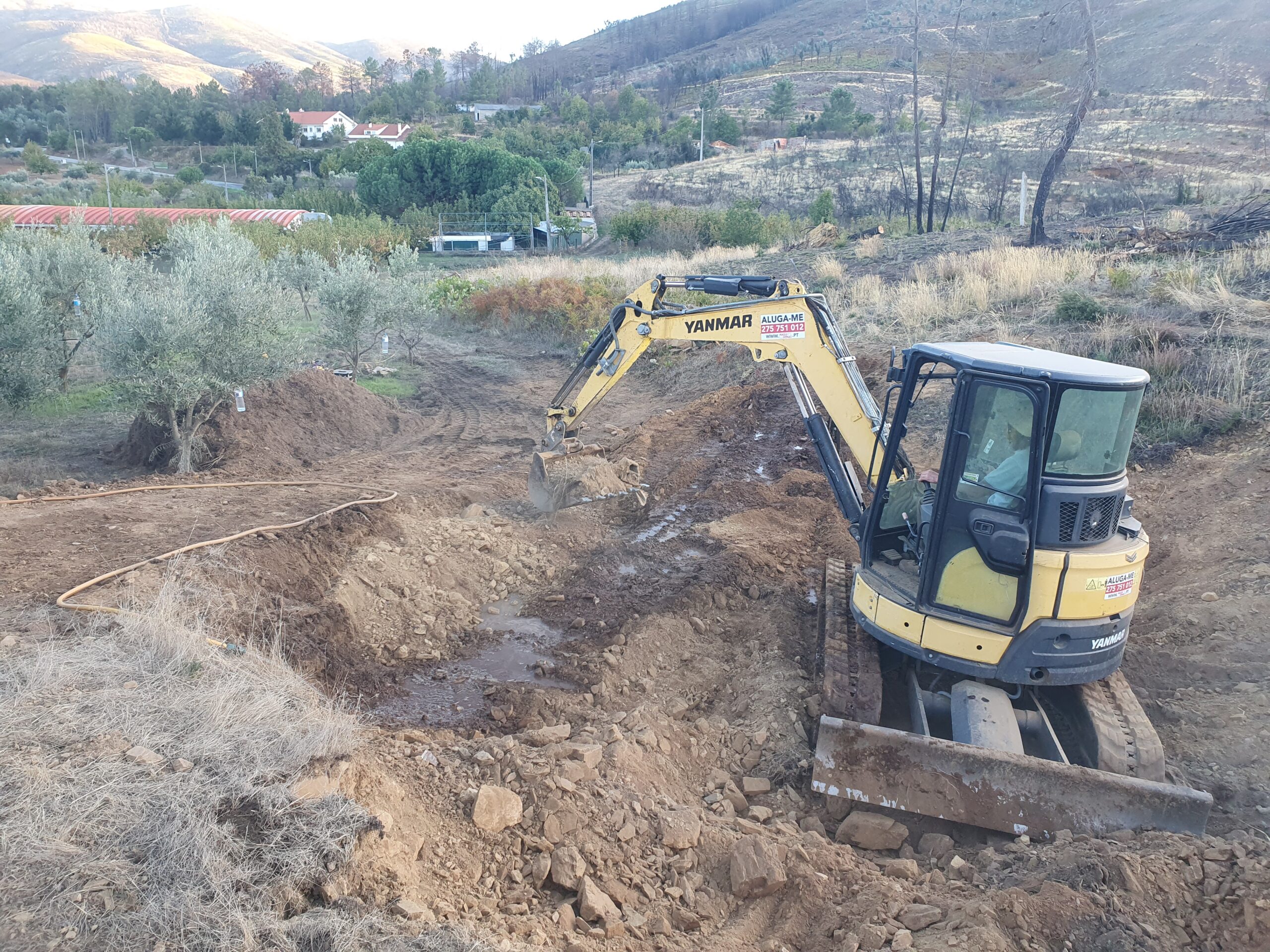
The property had been devastated by a fire several years ago and, as a result, was barren, with little vegetation, shade, or structure that could retain water. The client’s request: extreme rainfall events should be mitigated here as well.
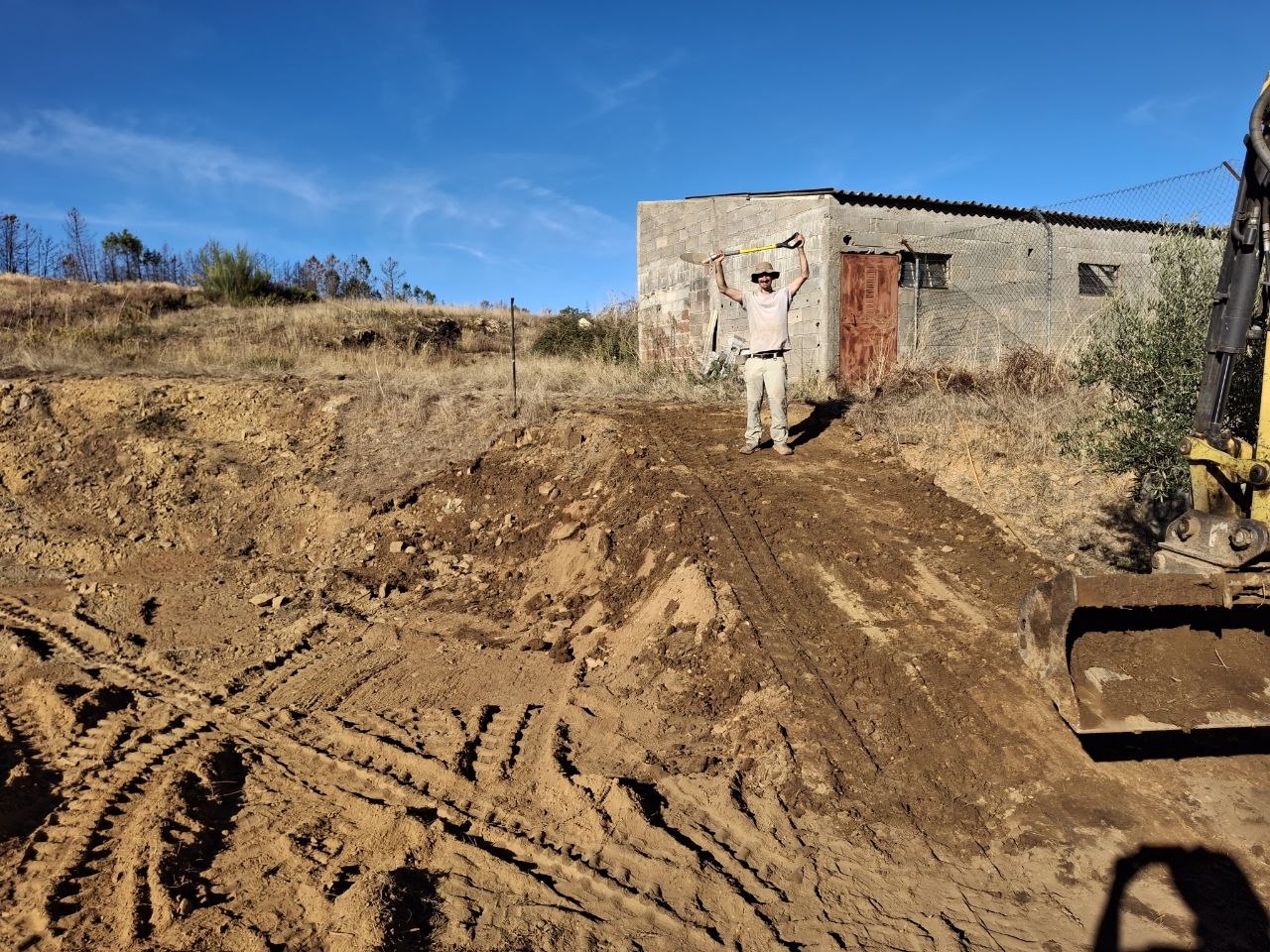
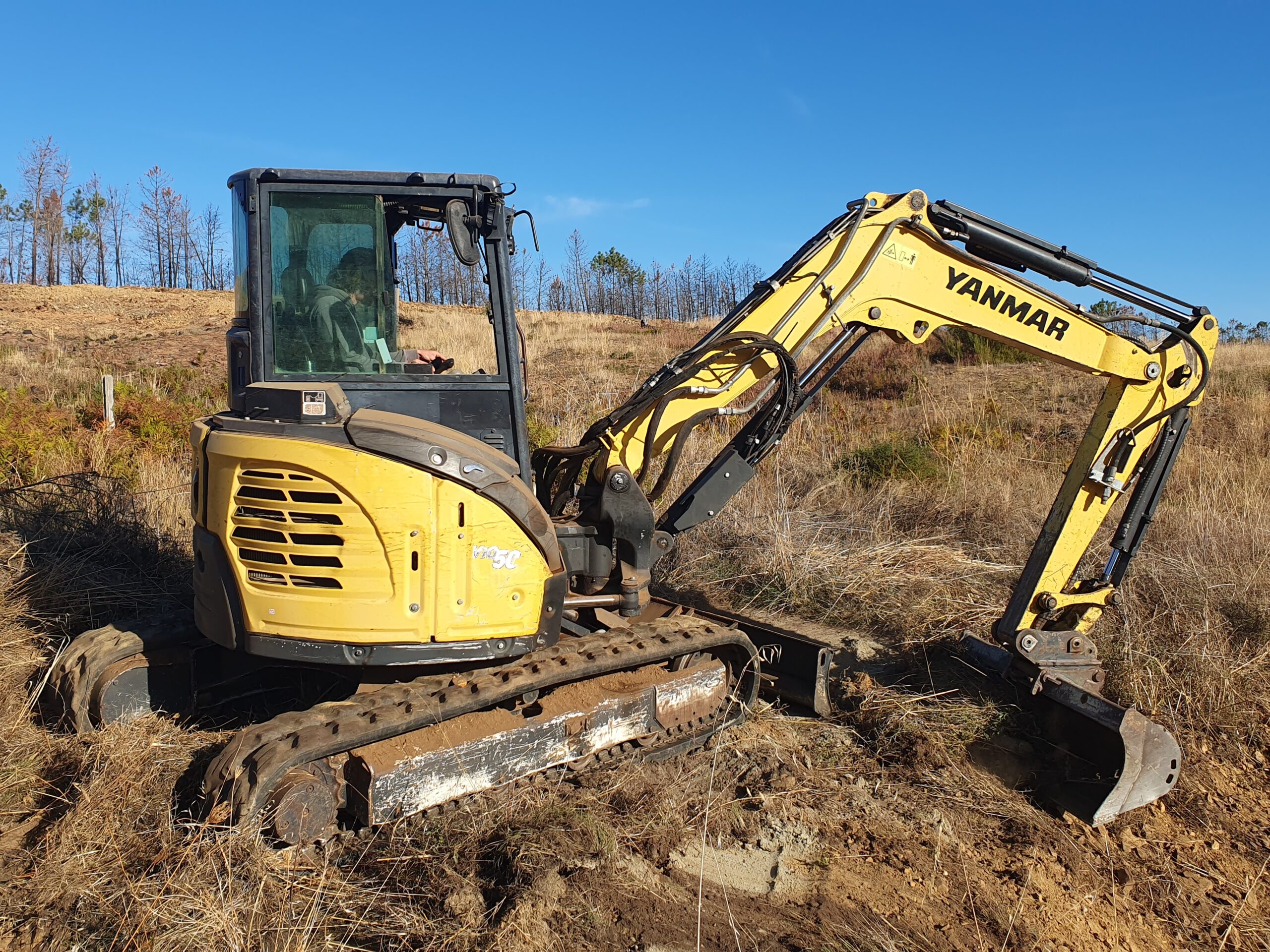
My fellow student had borrowed a 5-metric-ton excavator, which he first used to conduct a test dig to determine the nature of the subsoil. We then used a laser level to measure the planned elements.
The strategy involved creating a strategically placed infiltration basin with a ramp for vehicle access. This was intended to collect water from the upstream watershed and allow it to slowly seep into the ground. Excess water would be directed via an overflow to an adjacent terrace or a swale — an elongated trench-and-mound system — with a gentle slope, guiding it across the slope. At the end, another basin would collect the water before it leaves the property. In this way, the risk of flooding and erosion is transformed into a resource that supplies water to the land below and contributes to groundwater recharge overall.
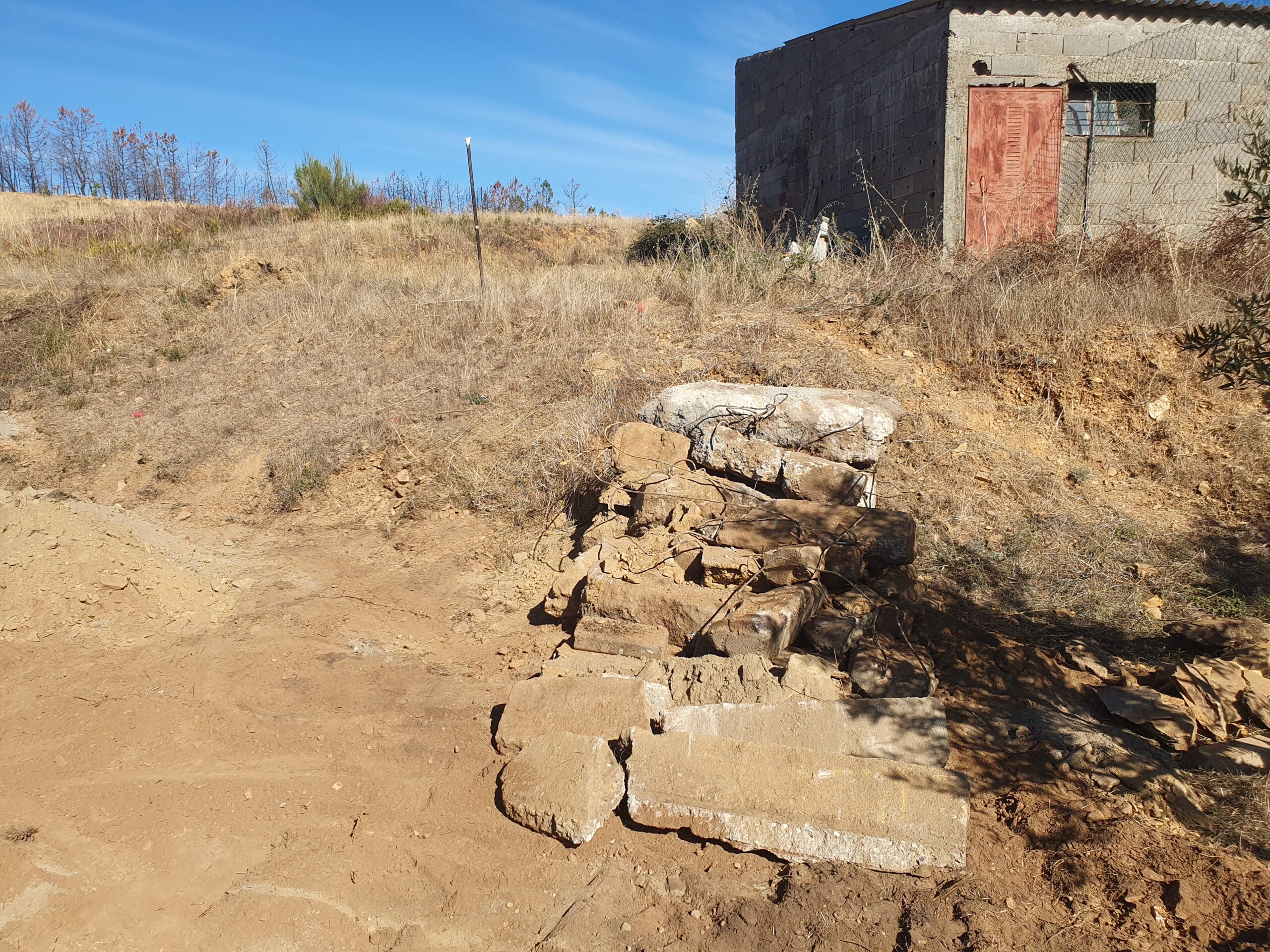
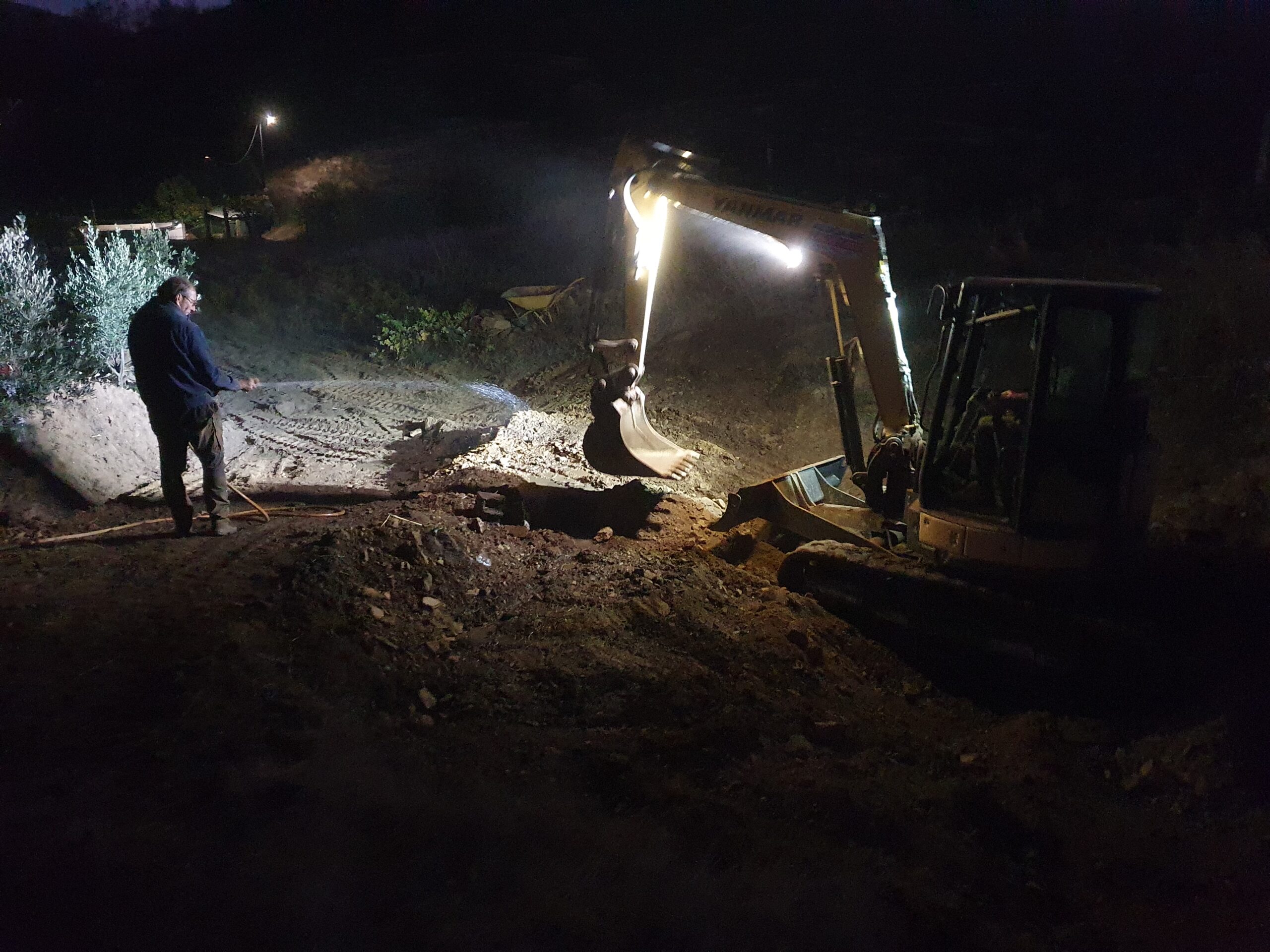
While constructing the first infiltration basin, we came across some concrete elements and other debris that had apparently been buried there in the past. Instead of treating them as trash, we decided on the spot to use them as the foundation for building the ramp we needed. Working as a team, we made progress step by step, sometimes working late into the evening.
Unfortunately, I eventually had to leave the project before it was completed because I had to return to Germany to prepare for an upcoming seminar. The work continues, however, and I’m curious to see how the area will develop with the winter precipitation in the coming months.
My Conclusion
Two weeks, two countries, two projects — the conclusion remains the same: While public discourse focuses on measures to reduce CO₂ emissions or on technical solutions for its sequestration, the influence of vegetation and water on our climate is largely overlooked — let alone the idea that managing them might be considered a viable option for addressing the consequences of climate change on a large scale. Precipitation is viewed as a problem and is drained away as quickly as possible. However, water is the foundation of life and thus the most important resource for coping with a changing climate and for regenerating degraded landscapes. As long as water is available, it is possible to live and work even in higher temperatures, while vegetation and soil formation naturally sequester carbon. Whether using a plant-based treatment system or an infiltration basin — the principles are the same: slow, spread and infiltrate.
I really enjoyed working in Spain and Portugal, and it was very fulfilling. With that in mind, I’m looking forward to more projects and to being able to make a positive contribution through them!
Leave a Reply